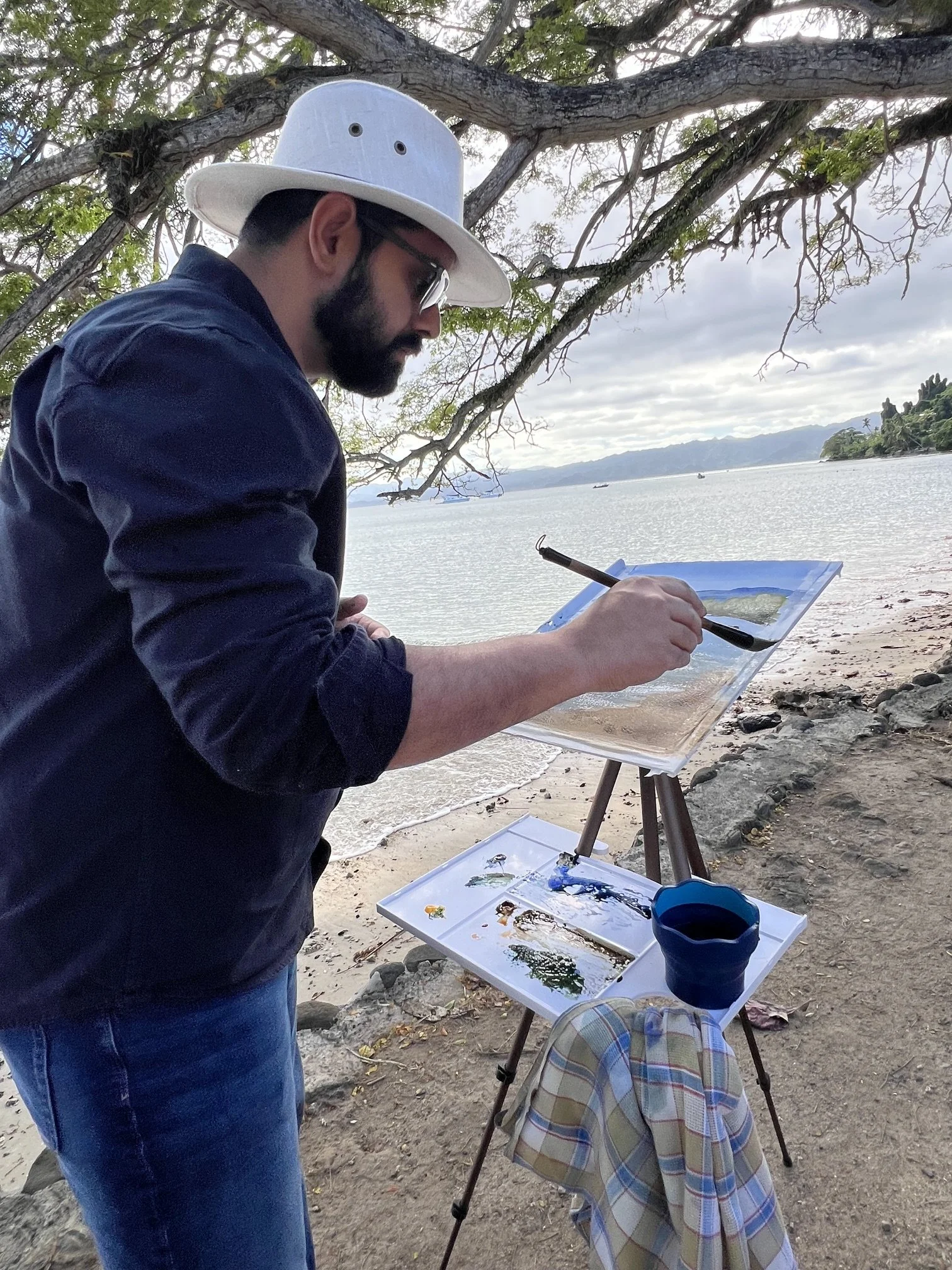
Paper size: 38cm × 56cm, 4 sheets per day should be enough
Recommended brands:
Baohong masters choice or the new Classic range CP/Rough (Excellent value, available in AUS & NZ). The paper of the same name available on Temu is NOT ideal.
Arches CP/Rough
Choose a brand that works and stick with it till you get the hang of it.
Brushes
Keep it minimal, these are enough for almost everything:
A large mop brush for washes
A med round brush (your primary brush - natural hair or mixed, avoid synthetic-only brush if possible). I use a single brush for all my work. When stocks last, this brush is made available for sale at workshops for $70. Let me know beforehand if you need one.
A small brush for details
The goal is to use one primary brush for most of your painting. Over time this builds intuitiveness with water control, pigment loading and calligraphic strokes.
Colours
You only need 5 colours maximum (for most of my paintings I use just 2-3).
Minimal Palette
Ultramarine Blue
Cobalt Blue
Crimson Lake/ Permanent Rose / Rose Madder (preferred over Alizarin)
Transparent Yellow / Aureolin / Indian Yellow
Burnt Sienna
Colour Selection Tips
Choose transparent, single-pigment colours wherever possible
Avoid opaque & semi opaque pigments
Avoid colours made of more than 1 pigment. E.g. sap green (3 pigments)
A limited palette leads to colour harmony and fewer pigments overall creates cleaner mixes
Avoid cake/pan sets. Prefer professional watercolour tubes.